Diesel Tank Sizing Guide: How Much Fuel Storage Does Your Generator Actually Need? (Pakistan 2026)
By Mech-Civ Construction Services (MCCS) | Storage Tank Fabrication Division
Buying a diesel storage tank without doing the sizing math first is the most common — and most expensive — mistake we see industrial and commercial buyers make in Pakistan. Undersize it, and you’re refuelling every other day or risking a shutdown mid-shift. Oversize it, and you’ve paid for steel, land, and bunding you’ll never use. This guide gives you the actual formula, a ready-reference table by generator size, and the real-world factors that change the number.
The Short Answer
Tank Capacity (litres) = Generator Fuel Consumption (L/hr) × Desired Runtime (hours) × 1.15 (safety margin)
The 15% margin accounts for fuel expansion, tank ullage (the empty space every tank must keep at the top), and pump suction cut-off — you never draw a diesel tank down to literally zero.
Step 1: Find Your Generator’s Fuel Consumption
Every genset has a fuel consumption rate at 75% load (the standard rating manufacturers publish) — check your generator’s spec sheet or nameplate. If you don’t have it, use this reference table as a planning estimate:
| Generator Size (kVA) | Approx. Diesel Consumption (Litres/Hour, 75% load) |
|---|---|
| 20 kVA | 4–5 L/hr |
| 50 kVA | 9–11 L/hr |
| 100 kVA | 18–22 L/hr |
| 200 kVA | 35–42 L/hr |
| 250 kVA | 44–52 L/hr |
| 500 kVA | 85–100 L/hr |
| 1000 kVA | 165–195 L/hr |
(Figures are indicative planning estimates — always confirm against your genset’s actual manufacturer datasheet before finalising tank size.)
Step 2: Decide Your Runtime Requirement
This is the number most buyers get wrong — they guess. Work it out from your actual operating pattern:
| Use Case | Typical Runtime to Size For |
|---|---|
| Backup during load-shedding / grid outages | 8–12 hours per refill cycle |
| Standby for critical operations (hospitals, cold storage, data rooms) | 24 hours minimum |
| Primary power source (off-grid site, remote plant) | 72 hours to 7 days |
| Construction site / temporary generator | 3–5 days between diesel deliveries |
Step 3: Run the Formula — Worked Example
Scenario: A textile unit on Ferozepur Road runs a 250 kVA generator during daily load-shedding, wants 12-hour autonomy per refill.
Consumption: 48 L/hr (mid-range from table)
Runtime: 12 hours
Tank size = 48 × 12 × 1.15 = 662 litres → round up to 1,000-litre tank (next standard size, gives buffer for consumption spikes at full load)
Second scenario: A cold storage facility in Sundar Industrial Estate wants 72-hour backup autonomy for a 500 kVA generator (critical load — cannot afford a fuel-out shutdown).
Consumption: 92 L/hr
Runtime: 72 hours
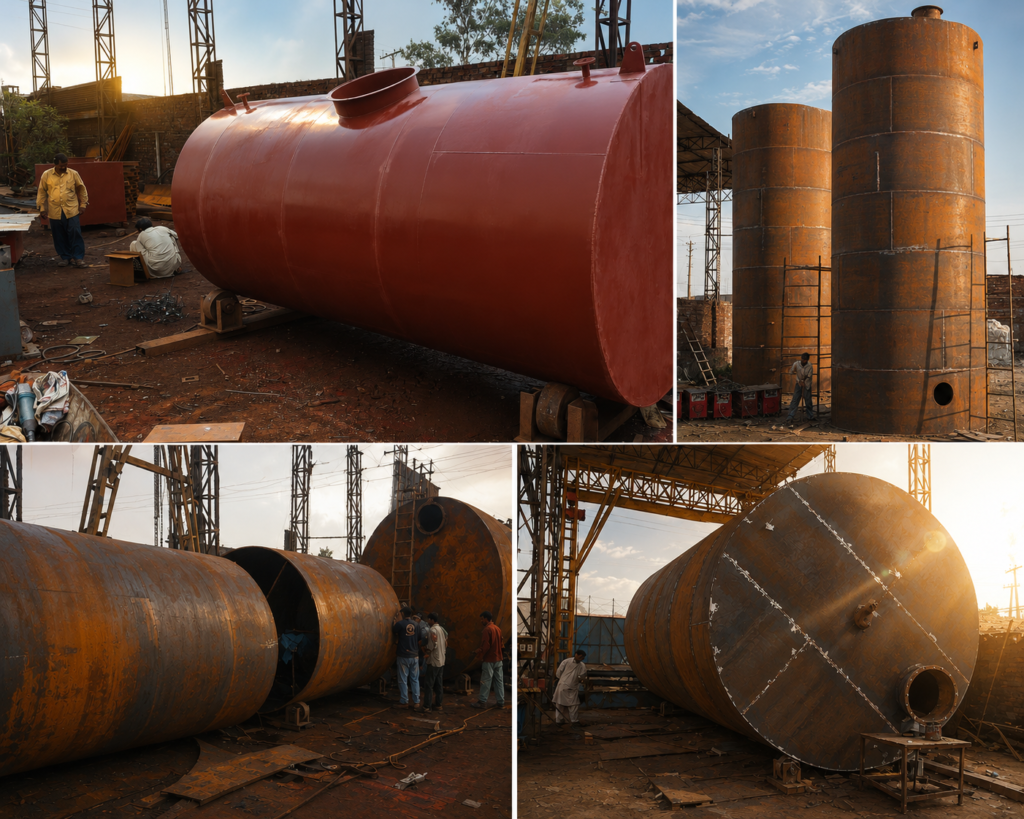
Tank size = 92 × 72 × 1.15 = 7,617 litres → round up to 10,000-litre tankDay Tank vs Bulk Storage Tank vs Underground Tank — Which One Do You Actually Need?
| Tank Type | Typical Size | Best For |
|---|---|---|
| Day tank | 200–1,000 L | Sits next to the generator; holds a few hours’ supply; refilled from a bulk tank or delivery |
| Bulk above-ground tank | 2,000–50,000+ L | Main site reserve; feeds day tank or generator directly; needs a bunded/diked base for spill containment |
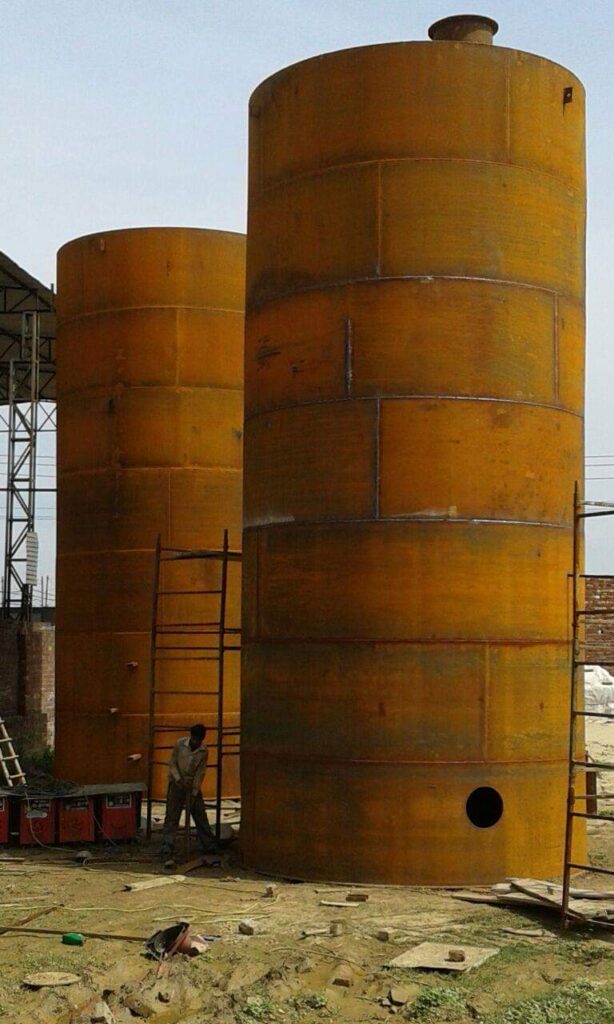
| Underground tank (UST) | 5,000–100,000+ L | Space-constrained sites, petrol stations, sites with strict fire-safety separation distances |
A common and cost-effective setup for factories and commercial buildings in Lahore is a small day tank at the generator + one larger bulk tank at the site boundary, rather than a single oversized tank next to the machine — this reduces fire-safety separation issues and lets you negotiate better bulk-fuel delivery pricing.
Factors That Change Your Real-World Number
- Load factor — a generator rarely runs at 100% load continuously; consumption tables assume ~75% load, so consistently heavier loads (e.g., running multiple large motors) push consumption up 10–20%.
- Ambient temperature — engines run less efficiently in Lahore’s peak summer heat; add a small margin if the generator is exposed rather than in a ventilated enclosure.
- Refuelling logistics — if your site is far from a fuel depot or delivery is unreliable during certain seasons, size up rather than cutting it close.
- Future load growth — if you’re likely to add a second production line or expand the shed, size the tank (or at least the foundation/bunding) for the larger future generator, not just today’s.
- Fire-safety separation distance — Punjab civil defence and OGRA-aligned guidelines require minimum clearances between fuel tanks and buildings/site boundaries; this can affect whether a single large tank or multiple smaller tanks is the practical choice, independent of the pure sizing math.
Getting the Sizing Right the First Time
Formulas give you a strong starting estimate, but the final number should account for your specific generator model, load profile, and site layout. Mech-Civ’s engineering team reviews your generator nameplate data and site conditions and comes back with an exact recommended capacity — at no charge — before you commit to a fabrication order.
📞 Call: +92 321 877 1689 💬 WhatsApp: Chat now 📍 Visit: Mech-Civ, Lahore
Frequently Asked Questions
How do I calculate the diesel tank size for my generator? Multiply your generator’s fuel consumption in litres per hour (at 75% load, from the manufacturer datasheet) by the number of hours you want the tank to run without refuelling, then add a 15% margin for ullage and pump cut-off. See the worked examples above for a full walkthrough.
What size diesel tank do I need for a 100 kVA generator? A 100 kVA generator consumes roughly 18–22 litres per hour at 75% load. For 12 hours of autonomy, that works out to approximately 250–300 litres — most buyers round up to a standard 500-litre tank for a practical safety buffer.
Should I install one large tank or a day tank plus a bulk tank? For most factories and commercial sites in Lahore, a small day tank (200–1,000 L) beside the generator, fed from a larger bulk tank at the site boundary, is more practical than a single oversized tank next to the machine — it simplifies fire-safety separation distances and gives you better bulk-fuel purchasing terms.
Does Mech-Civ help calculate the right tank size before I order? Yes. Share your generator’s kVA rating (or fuel consumption from the nameplate) and desired runtime, and our engineering team will confirm the exact recommended tank capacity and configuration at no charge before you place an order.
Is a bigger tank always safer than sizing it exactly? Not necessarily — oversizing adds unnecessary steel cost, land footprint, and bunding requirements, and diesel sitting unused for long periods can degrade in quality. It’s better to size correctly for your real runtime need and add a modest (10–15%) margin, rather than substantially overbuilding.
MECH-CIV (Peb, Pre-Engineered Buildings, Peb Manufacturing)
Address: Suit# 2 Second Floor, Khursheed Plaza, D.H.A. Main Blvd, Dha Phase 2 Cantt, Lahore, 54000
Phone: 0321 8771689
| Saturday | Open 24 hours |
| Sunday | Open 24 hours |
| Monday | Open 24 hours |
| Tuesday | Open 24 hours |
| Wednesday | Open 24 hours |
| Thursday | Open 24 hours |
| Friday | Open 24 hours |
Leave a Reply